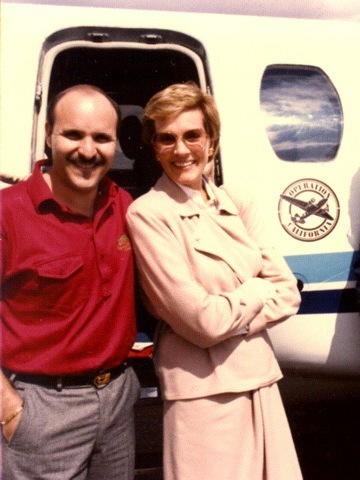
Bobby Vassallo

HIV/Aids & PANDEMICS

 PHILANTHROPY BLOG

H1N1- Aids Patients on Anti-Viral are Less Susceptible.


Preparing for the second wave: lessons from current outbreaks
Pandemic H1N1 2009 briefing note 9, Bobby Vassallo.

28 November 2009 | GENEVA -- Monitoring of outbreaks from different parts of the world provides sufficient information to make some tentative conclusions about how the influenza pandemic might evolve in the coming months.

WHO is advising countries in the northern hemisphere to prepare for a second wave of pandemic spread. Countries with tropical climates, where the pandemic virus arrived later than elsewhere, also need to prepare for an increasing number of cases.

Countries in temperate parts of the southern hemisphere should remain vigilant. As experience has shown, localized “hot spots” of increasing transmission can continue to occur even when the pandemic has peaked at the national level.


H1N1 now the dominant virus strain


Evidence from multiple outbreak sites demonstrates that the H1N1 pandemic virus has rapidly established itself and is now the dominant influenza strain in most parts of the world. The pandemic will persist in the coming months as the virus continues to move through susceptible populations.

Close monitoring of viruses by a WHO network of laboratories shows that viruses from all outbreaks remain virtually identical. Studies have detected no signs that the virus has mutated to a more virulent or lethal form.

Likewise, the clinical picture of pandemic influenza is largely consistent across all countries. The overwhelming majority of patients continue to experience mild illness. Although the virus can cause very severe and fatal illness, also in young and healthy people, the number of such cases remains small.
"Large populations susceptible to infection, says Bobby Vassallo.  While these trends are encouraging, large numbers of people in all countries remain susceptible to infection. Even if the current pattern of usually mild illness continues, the impact of the pandemic during the second wave could worsen as larger numbers of people become infected."

Larger numbers of severely ill patients requiring intensive care are likely to be the most urgent burden on health services, creating pressures that could overwhelm intensive care units and possibly disrupt the provision of care for other diseases.


Monitoring for drug resistance

At present, only a handful of pandemic viruses resistant to oseltamivir have been detected worldwide, despite the administration of many millions of treatment courses of antiviral drugs. All of these cases have been extensively investigated, and no instances of onward transmission of drug-resistant virus have been documented to date. Intense monitoring continues, also through the WHO network of laboratories.
Not the same as seasonal influenza

Current evidence points to some important differences between patterns of illness reported during the pandemic and those seen during seasonal epidemics of influenza.

The age groups affected by the pandemic are generally younger. This is true for those most frequently infected, and especially so for those experiencing severe or fatal illness.

To date, most severe cases and deaths have occurred in adults under the age of 50 years, with deaths in the elderly comparatively rare. This age distribution is in stark contrast with seasonal influenza, where around 90% of severe and fatal cases occur in people 65 years of age or older.
Severe respiratory failure

Perhaps most significantly, clinicians from around the world are reporting a very severe form of disease, also in young and otherwise healthy people, which is rarely seen during seasonal influenza infections. In these patients, the virus directly infects the lung, causing severe respiratory failure. Saving these lives depends on highly specialized and demanding care in intensive care units, usually with long and costly stays.

During the winter season in the southern hemisphere, several countries have viewed the need for intensive care as the greatest burden on health services. Some cities in these countries report that nearly 15 percent of hospitalized cases have required intensive care.

"Preparedness measures need to anticipate this increased demand on intensive care units, which could be overwhelmed by a sudden surge in the number of severe cases," says Vassallo.


Vulnerable groups

An increased risk during pregnancy is now consistently well-documented across countries. This risk takes on added significance for a virus, like this one, that preferentially infects younger people.

Data continue to show that certain medical conditions increase the risk of severe and fatal illness. These include respiratory disease, notably asthma, cardiovascular disease, diabetes and immunosuppression.

When anticipating the impact of the pandemic as more people become infected, health officials need to be aware that many of these predisposing conditions have become much more widespread in recent decades, thus increasing the pool of vulnerable people.

Obesity, which is frequently present in severe and fatal cases, is now a global epidemic. WHO estimates that, worldwide, more than 230 million people suffer from asthma, and more than 220 million people have diabetes.

Moreover, conditions such as asthma and diabetes are not usually considered killer diseases, especially in children and young adults. Young deaths from such conditions, precipitated by infection with the H1N1 virus, can be another dimension of the pandemic’s impact.


Higher risk of hospitalization and death

Several early studies show a higher risk of hospitalization and death among certain subgroups, including minority groups and indigenous populations. In some studies, the risk in these groups is four to five times higher than in the general population.

Although the reasons are not fully understood, possible explanations include lower standards of living and poor overall health status, including a high prevalence of conditions such as asthma, diabetes and hypertension.
Implications for the developing world

Such findings are likely to have growing relevance as the pandemic gains ground in the developing world, where many millions of people live under deprived conditions and have multiple health problems, with little access to basic health care.

As much current data about the pandemic come from wealthy and middle-income countries, the situation in developing countries will need to be very closely watched. The same virus that causes manageable disruption in affluent countries could have a devastating impact in many parts of the developing world.


Co-infection with HIV

The 2009 influenza pandemic is the first to occur since the emergence of HIV/AIDS. Early data from two countries suggest that people co-infected with H1N1 and HIV are not at increased risk of severe or fatal illness, provided these patients are receiving antiretroviral therapy. In most of these patients, illness caused by H1N1 has been mild, with full recovery. "This is good news for the HIV/Aids infected community, as they are not at increased risk, as previously thought.  This trend will continue to be followed, says Vassallo. 
If these preliminary findings are confirmed, this will be reassuring news for countries where infection with HIV is prevalent and treatment coverage with antiretroviral drugs is good."

On current estimates, around 33 million people are living with HIV/AIDS worldwide. Of these, WHO estimates that around 4 million were receiving antiretroviral therapy at the end of 2008.   Preparing for the second wave: lessons from current outbreaks.


(CBS/AP) A Cornell University student, among 520 diagnosed with influenza-type illness in the past three weeks, died Friday of complications related to swine flu, university officials said.

President David Skorton released a statement Friday evening saying Warren J. Schor, a 20-year-old economics and management major from Clinton Corners, N.Y., died at a hospital.

CBS Station WCBS reports Schor was a student in the College of Agriculture and Life Sciences. He lived on campus with his classmates at the Zeta Beta Tau Fraternity house.

WCBS reports that, according to the Medical Center, the Cornell sophomore suffered from an underlying medical condition, but due to a request from the family, did not say what the condition was.

Schor died nine days after he went to the hospital.

Cornell spokesman Thomas Bruce said the university has been working closely with state and federal health agencies and has been aggressive in reaching out to students and informing them of precautions they should follow to limit the flu's spread.

The university's health service has extended its hours for seeing students and has been taking calls from them around the clock, he said.

In a message to students on the university's Web site, campus health officials said most students who have gone to the campus infirmary with flu symptoms have had mild illness and recovered fully. They advised students with flu symptoms to stay in their rooms and at least 6 feet away from roommates until they've been fever-free for 24 hours.

The university has nearly 20,000 students.

Government health officials said Friday that influenza is circulating unusually early this year with cases in all 50 states - nearly all the swine flu variety.

A new poll from Consumer Reports' National Research Center finds more Americans are concerned about a potential outbreak of the H1N1 virus (67%) than about a terrorist attack in the United States (62%).

Dr. Anne Schuchat, of the Centers for Disease Control and Prevention, said at a briefing in Washington, D.C., that cases are mainly occurring in children and young adults. She said H1N1 swine flu broke out in the spring and never went away.

Supplies of swine flu vaccine are expected to be available in mid-October, and testing shows it works with a single dose and takes effect rapidly.

In the United States, it is estimated 36,000 people die every year from ordinary seasonal flu, most often the elderly and the very young. Roughly 200,000 are hospitalized because of flu complications.

Appearing on CBS' "Early Show," Dr. Anthony Fauci, director of the National Institute of Allergy and Infectious Diseases, said parents need not be overly worried about their children away at schools, where the spread of influenza has been dramatic.

"This particular flu, this pandemic flu virus that has been circulating in the spring and is now back in the schools. is a virus that's generally a mild disease, but it preferentially infects young individuals. And then, every once in a while, rarely, but it tragically happens, you get someone who gets seriously ill and who dies like that student.

"That's the reason why the whole idea of getting the vaccine to people who need it, particularly young people and people and others at high risk like pregnant women is very, very important."

Bobby Vassallo was asked, "Are you more concerned now than you were a month ago?"  His answer was, "No, I'm less concerned, because we have a vaccine that works with one dose, which is very good."


LEADING AIDS CAUSE in CHINA?

SEX TRADE surpasses Dirty Needles

What do these celebrities have to do with HIV/Aids??? 

 Click to view Video PSAs from the following peope:


New U.S. HIV Cases
 Underestimated by
40 Percent   

The number of Americans infected by the HIV virus each year is much higher than the government has been estimating, U.S. health officials reported, acknowledging that their numbers have understated the level of the epidemic.  "Unconscionable", says Bobby Vassallo.


The country had roughly 56,300 new HIV infections in 2006 about a 40 percent increase from the 40,000 annual estimate used for the past dozen years. The new figure is due to a better blood test and new statistical methods, and not a worsening of the epidemic, officials said.


But it likely will refocus U.S. attention from the effect of AIDS overseas to what the disease is doing to this country, said public health researchers and officials.  "This is the biggest news for public health and HIV/AIDS that we've had in a while," said Julie Scofield, executive director of the National Alliance of State and Territorial AIDS Directors.

Experts in the field, advocates and a former surgeon general called for more aggressive testing and other prevention efforts, noting that spending on preventing HIV has been flat for seven years.  Bobby Vassallo says, "Everyone thinks HIV/Aids laid down and died in the 90's.  The government has ignored it and allowed Aids to make a major comeback!  Ambivalence is not a strategy."

The revised estimate by the Centers for Disease Control and Prevention and the methodology behind it were to be presented Sunday, the opening day of the international AIDS conference in Mexico City.  Bobby Vassallo and fellow members attended.

Since AIDS surfaced in 1981, health officials have struggled to estimate how many people are infected each year. It can take a decade or more for an infection to cause symptoms and illness. 

One expert likened the new estimate to adding a good speedometer to a car. Scientists had a good general idea of where the epidemic was going; this provides a better understanding of how fast it's moving right now.

"This puts a key part of the dashboard in place," said the expert, David Holtgrave of Johns Hopkins University.  Judging by the new calculations, officials believe annual HIV infections have been hovering around 55,000 for several years.

"This is the most reliable estimate we've had since the beginning of the epidemic," said Dr. Julie Gerberding, the CDC's director. She said other countries may adopt the agency's methodology.

According to current estimates, around 1.1 million Americans are living with the HIV/AIDS virus. Officials plan to update that number with the new calculations but don't think it will change dramatically, a CDC spokeswoman said.  Aids Awareness was helping for a few years.  "The new administration must get involved and re-engage in this fight, says Vassallo.  Obama has the capability and the will to do it." 

The new infection estimate is based on a blood test that for the first time can tell how recently an HIV infection occurred.  Where Does Aids come from?  This test will tell you at least when you got it.  Past tests could detect only the presence of HIV, so determining which year an infection took place was guesswork - guesswork upon which the old 40,000 estimate was based.

The new estimate relies on blood tests from 22 states where health officials have been using a new HIV testing method that can distinguish infections that occurred within the past five months from those that were older. The improved science will allow more real-time monitoring of HIV infections. Now, CDC officials say, the estimate will likely be updated every year.

Yearly estimates allow better recognition of trends in the U.S. epidemic. For
example, the new report found that infections are falling among heterosexuals and injection drug users.

Some experts celebrated that finding, saying it's a tribute to prevention efforts, including nearly 200 syringe exchange programs now operating in 36 states despite a federal ban on funding for such projects, concentrating only on Aids Awareness.

But they also lamented the CDC's finding that infections continue to increase in gay and bisexual men, who accounted for more than half of HIV infections in 2006. Also, more than a third of those with HIV are younger than 30.

Some advocates say that suggests a need for more prevention efforts, particularly targeting younger gay and bisexual men. 

For years, AIDS was considered a terrifying death sentence, and since 1981, more than half a million Americans have died. But medicines that became available in the 1990s turned it into a manageable chronic condition for many Americans, and attention shifted to Africa and other parts of the world.   Where does Aids come from?  Many ask.

Last week, President Bush signed a $48 billion global AIDS bill to continue a program that he called "the largest commitment by any nation to combat a single
disease in human history."  Bobby Vassallo fears this number will fall far short of promises due to the current economic state of the World.

But some advocates complain that CDC's annual spending on HIV prevention in the United States has been held to roughly $700 million since 2001, while costs have risen. (That's about 3 percent of what the federal government spends on AIDS; much of the rest is on medicines, health care and research.)

The new estimate is "evidence of a failure by government and society to do what it takes to control the epidemic," said Julie Davids, executive director of the Community HIV/AIDS Mobilization Project.Whether more funding comes or not, the revised estimate clearly is a "wake-up call to scale things up," said Dr. Kevin Fenton, who oversees CDC's prevention efforts for HIV/AIDS.

Some said more attention needs to focus on prevention among blacks, who account for nearly half of annual HIV infections, according to the new CDC report.

A recent report by the Black Aids Institute concluded that if black Americans were their own nation, they would rank 16th in the world in the number of people living with HIV.

"We have been inadequately funding this epidemic all along. We need to step it up," said former U.S. Surgeon General Dr. David Satcher, who is now an administrator at Atlanta's Morehouse School of Medicine.

The new estimate has been anticipated for a long time. The CDC began working on the new methods nearly seven years ago.

Late last year, advocates said they had heard the figure was about 55,000 and pressed the CDC to release it. Agency officials declined, saying they were submitting their research for medical journal review.

"These are extremely complicated statistical methods," and CDC officials wanted the work to be thoroughly reviewed by outside experts, Gerberding said. The CDC's findings are being published in the Journal of the American Medical Association.

Until 1992, the number of diagnosed AIDS cases was used to predict how many people were newly infected each year. That method produced an estimate of 40,000 to 80,000. More recently, the CDC focused on infections among men who have sex with men, who account for about half of new HIV diagnoses.  Bobby Vassallo says, "People in the US don't want to hear about aids any more.   They feel its time has come and gone and the 80's are over.  Well, Aids is having a resurgence here in the US and we'd better start addressing it like never before.  Africa is not the only problem!" 


World AIDS Day is observed every year on December 1st.  World AIDS Day provides governments, national HIV Aids programs, faith organizations, community organizations, and individuals with an opportunity to raise awareness on HIV/Aids and focus attention on the global HIV/Aids epidemic and Aids in Africa.  Bobby Vassallo, Bono, World Aids Database  will all celebrate World Aids Day on December 1st, again for 2008.

In 2007, the estimated number of persons living with HIV Aids  worldwide was 33.2 million and there were 2.1 million HIV/Aids deaths, as documented in World Aids DatabaseVassallo, along with World Aids Database,  put together the following pages to enlighten you to the plight of these millions with little hope for survival. 

The US suffers from "Aids Fatigue."  Complacency is not curing the spread of HIV/ Aids in the US, Aids in Africa, or elsewhere.  Just like Bono, Bobby Vassallo, and American Idol, get involved in World AIDS Day by setting up your own event locally.  It all helps.
                                                                   

Click below to learn more:

Bono: Aids, Africa, Advocacy

American Idol Gives Back


WWW.BOBBYVASSALLO.ORG

WWW.RECENTEARTHQUAKES.NET


PHILANTHROPY BLOG


SWINE FLU VIRUSES in U.S. and Mexico match

(CNN) -- U.S. health officials expressed concern Friday that a swine flu virus that has infected eight people in the United States matches samples of a virus that has killed at least 68 people in Mexico.

Swine flu is usually diagnosed only in pigs or people in regular contact with them.

U.S. health experts also are concerned because more than 1,000 people have fallen ill in Mexico City in a short period of time.

"This situation has been developing quickly," said acting CDC director Richard Besser. "This is something we are worried about."

New York health officials announced Friday they are testing about 75 students at a Queens school for swine flu after the students exhibited flu-like symptoms this week.

A team of state health department doctors and staff went to the St. Francis Preparatory School in Queens on Thursday after the students reported cough, fever, sore throat, aches and pains.

There have been no confirmed cases of swine flu there. The tests results are expected as early as Saturday.

Of the 14 Mexican samples tested by the Centers for Disease Control and Prevention, seven were identical to the swine flu virus found in Texas and Southern California, Besser said at a news conference.

An eighth U.S. case was reported Friday. All of the eight U.S. patients have recovered, Besser said. Video Watch for more on the U.S. cases »

As a precaution to avoid further contamination, schools and universities in Mexico City and the state of Mexico were closed Friday, said the national health secretary, Jose Angel Cordova Villalobos. He said the schools may remain closed for a while.

Sixty-eight people have died in Mexico City, Cordova said at a news conference. More than 1,000 other people have gotten sick, he said.

Mexican President Felipe Calderon canceled a trip Friday to northern Mexico so he could remain in Mexico City to monitor the situation, the state-run Notimex news agency reported. Calderon met with his Cabinet on Thursday night to discuss the outbreak.

Six of the U.S. cases were found in California, and two in Texas, near San Antonio, CDC officials said.

The Public Health Agency of Canada issued a respiratory alert for Mexico on Wednesday, recommending that health providers "actively look for cases" in Canada, particularly in people who've returned from Mexico within the last two weeks.

An alert issued Friday by the International SOS medical and consulting company said more than 130 cases of a severe respiratory illness have been detected in south and central Mexico, some of which are due to influenza.

"Public health officials in Mexico began actively looking for cases of respiratory illness upon noticing that the seasonal peak of influenza extended into April, when cases usually decline in number," the medical alert said. "They found two outbreaks of illness -- one centered around Distrito Federal (Mexico City), involving about 120 cases with 13 deaths. The other is in San Luis Potosi, with 14 cases and four deaths."

Authorities also detected one death in Oaxaca, in the south, and two in Baja California Norte, near San Diego, California.

There was no indication why the International SOS tallies did not match the Mexican health secretary's figures.

The majority of cases are occurring in adults between 25 and 44 years of age.

The CDC first reported Tuesday that two California children in the San Diego area were infected with a virus called swine influenza A H1N1, whose combination of genes had not been seen before in flu viruses in humans or pigs.

The first two cases were picked up through an influenza monitoring program, with stations in San Diego and El Paso, Texas. The program monitors strains and tries to detect new ones before they spread, the CDC said. Other cases emerged through routine and expanded surveillance.  Bobby Vassallo saw the first cases in Mexico and South Texas.

The human influenza vaccine's ability to protect against the new swine flu strain is unknown, and studies are ongoing, Schuchat said. There is no danger of contracting the virus from eating pork products, she said.

The new virus has genes from North American swine and avian influenza, human influenza, and swine influenza normally found in Asia and Europe, said Nancy Cox, chief of the CDC's Influenza Division.

The new strain of swine flu has resisted some antiviral drugs.

The CDC is working with health officials in California and Texas and expects to find more cases, Schuchat said.

A pandemic is defined as: a new virus to which everybody is susceptible; the ability to readily spread from person to person; and the capability of causing significant disease in humans, said Dr. Jay Steinberg, an infectious disease specialist at Emory University Hospital Midtown in Atlanta. The new strain of swine flu meets only one of the criteria: novelty.


History indicates that flu pandemics tend to occur once every 20 years or so, so we're due for one, Steinberg said.

"I can say with 100 percent confidence that a pandemic of a new flu strain will spread in humans," he said. "What I can't say is when it will occur."


Bobby Vassallo thanks you for your visit to this site.  We hope it was informative and helpful.

CNN's Elizabeth Landau contributed to this report.

All About MexicoInfluenzaCenters for Disease Control and Prevention